 EN
EN
What Are Anchor Bolts and Where Are They Used?
Picture this: a contractor sets heavy machinery on a fresh concrete pad and needs it to stay put — permanently. Or a homeowner wants to attach a deck ledger board to a concrete wall without it ever shifting. In both cases, the connection comes down to one essential fastener: the anchor bolt.
If you've ever wondered what separates a safe, lasting structural attachment from one that fails under load, understanding anchor bolts is the place to start. This guide explains what they are, how they work, which types exist, and where each one belongs.
What Is an Anchor Bolt?
An anchor bolt is a fastener designed to connect structural or non-structural elements — steel columns, equipment bases, handrails, and more — to a concrete or masonry substrate. Unlike a standard bolt that passes through two pieces of material, an anchor bolt is embedded in concrete on one end and threaded on the other end for nut-and-washer attachment.
Think of it like a tent peg in soil, but for concrete: the embedded portion locks the bolt in place, and the protruding threaded rod gives you a reliable attachment point above the surface.
Mechanically, anchor bolts transfer two types of loads:
- Tension (pull-out) forces — when something tries to pull the connected element away from the concrete
- Shear forces — when the connected element is pushed sideways along the concrete surface
The design and embedment depth of the anchor bolt determine how much of each force it can safely handle.
The Two Main Categories: Cast-In-Place vs. Post-Installed
Before getting into specific types, it helps to understand the fundamental split in anchor bolt categories.
Cast-in-Place Anchor Bolts
These are positioned in the concrete formwork before the concrete is poured. The bolt becomes an integral part of the cured concrete, providing maximum mechanical interlock. For new construction where bolt positions are known in advance, cast-in-place anchors are generally the stronger and more cost-effective choice.
Post-Installed Anchor Bolts
These are installed into concrete that has already cured — a drilled hole receives the anchor. Post-installed anchors are the solution for retrofit work, modifications to existing structures, and any situation where bolt positions weren't determined before the pour. They're more flexible in placement, but typically require more precise installation technique.
Types of Anchor Bolts and Their Applications
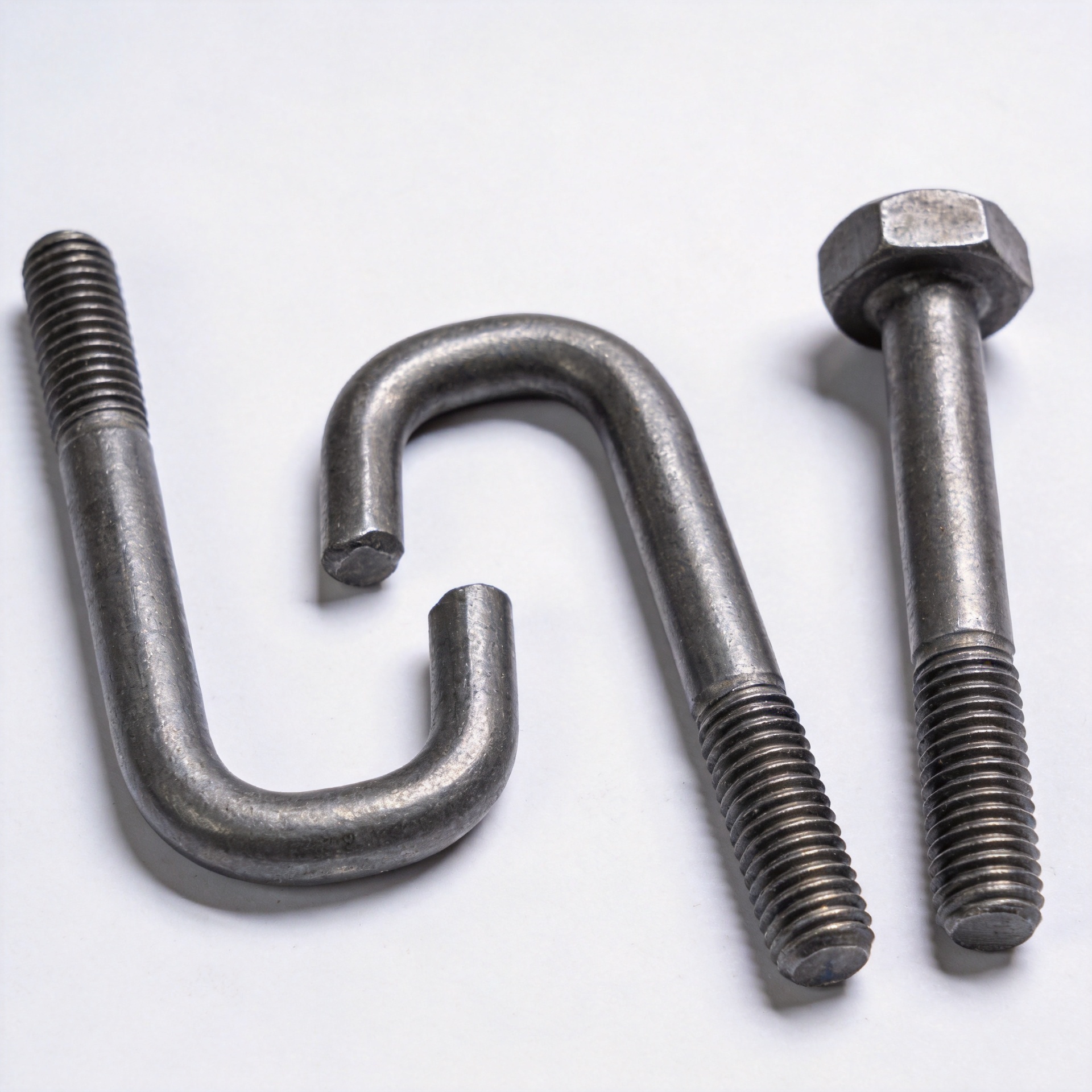
L-Bolt (Cast-in-Place)
The L-bolt is a straight rod bent 90° at the embedded end, forming an L shape. The 90° bend engages with the cured concrete to prevent pull-out. L-bolts are the most commonly ordered cast-in-place anchors for general construction — they're simple to manufacture and effective for light-to-medium structural connections.
Common sizes: M12 (1/2") to M36 (1-3/8") diameter
Where they're used: Base plates for light steel columns, sign poles, fence posts, equipment with moderate uplift loads, residential sill plates
J-Bolt (Cast-in-Place)
Similar to the L-bolt, but the hook is deeper — shaped like the letter J. The deeper hook engagement provides marginally better pull-out resistance than an L-bolt. If you're mounting equipment with moderate uplift forces and want more confidence than an L-bolt without upgrading to a fully headed bolt, the J-bolt is a practical middle ground.
Where they're used: Equipment mounting pads, pipe supports, handrail base plates, general-purpose anchoring in new concrete
Headed Anchor Bolt (Cast-in-Place)
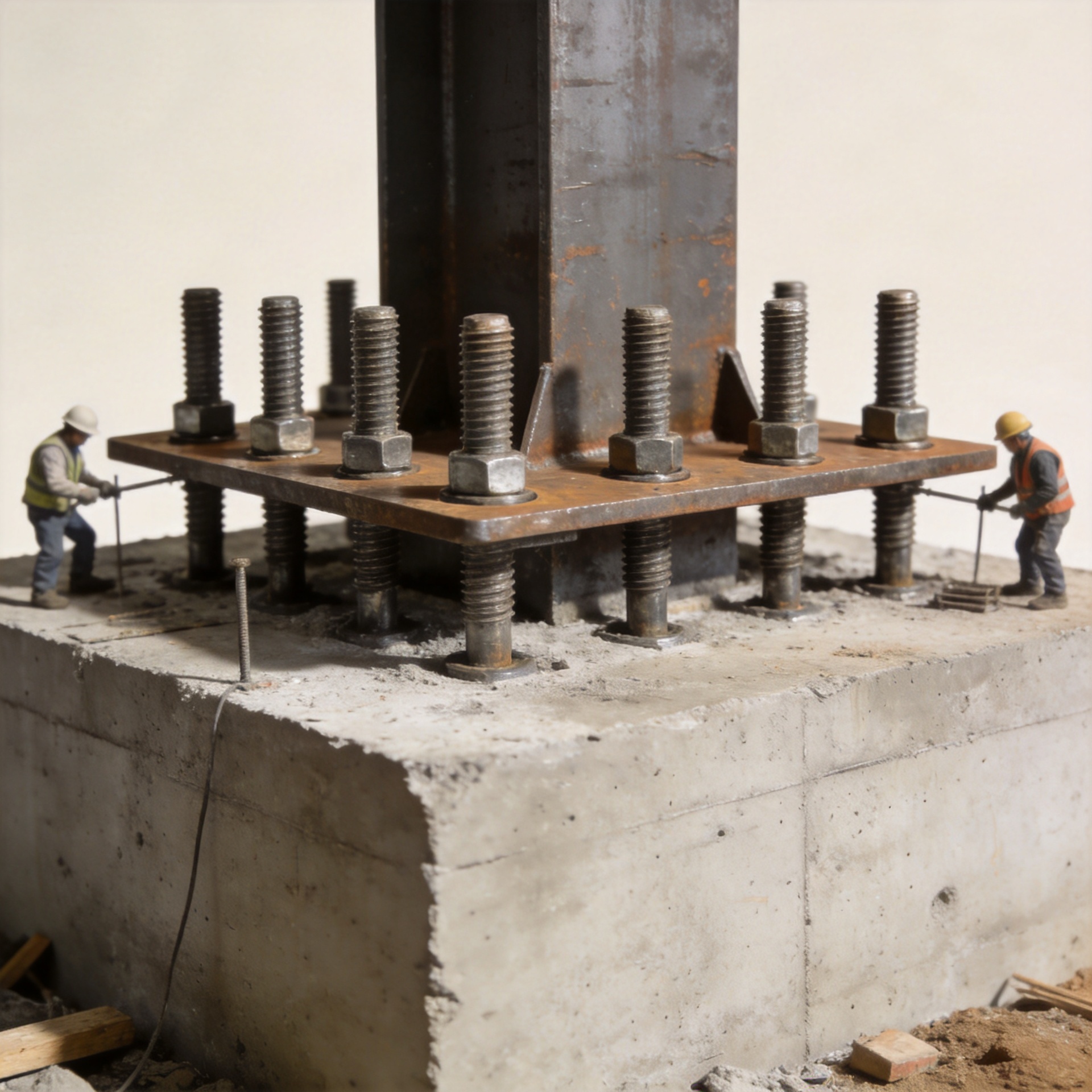
A straight bolt with a heavy hex head or welded bearing plate at the embedded end. The hex head or bearing plate creates direct mechanical bearing against the concrete, delivering the highest pull-out resistance available in cast-in-place anchors. If your project involves structural steel columns, crane rails, or any high-load connection, this is the standard specification.
Where they're used: Structural steel column base plates, heavy equipment foundations, crane rail anchorage, bridge and industrial structural connections
Wedge Anchor (Post-Installed)
A wedge anchor is drilled and hammered into hardened concrete. As the bolt is tightened, a sleeve expands against the hole wall, creating friction-based pull-out resistance. Installation requires accurate hole sizing — the wrong drill bit diameter significantly affects holding capacity.
Where they're used: Machinery on existing concrete floors, structural anchoring in existing buildings, heavy-duty applications in solid concrete
Sleeve Anchor (Post-Installed)
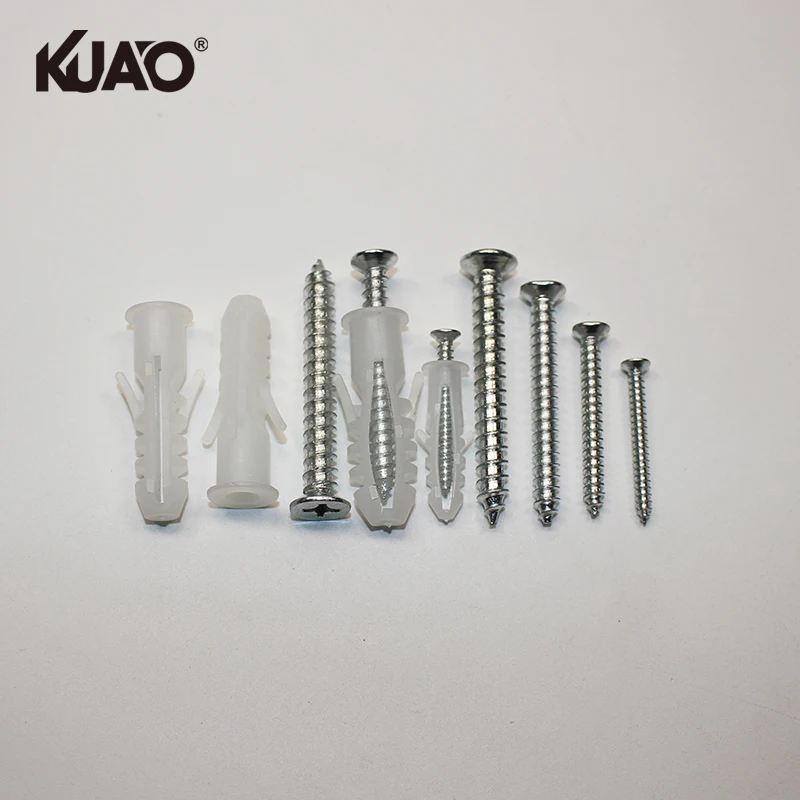
The sleeve anchor uses a threaded bolt inside an expandable sleeve. It's more forgiving than a wedge anchor in substrates that aren't perfectly solid concrete — brick, block, and masonry. A common choice for medium-duty work like attaching brackets, shelving, and electrical boxes to brick or block walls.
Where they're used: Masonry walls, brick substrates, handrails in existing structures, medium-duty commercial installations
Chemical (Epoxy) Anchor (Post-Installed)
An adhesive — typically epoxy or polyester resin — is injected into a cleaned hole before the threaded rod is inserted. Once cured, the bond is very strong and evenly distributed along the full embedment depth. Chemical anchors perform well in cracked concrete and seismic applications, and they're the go-to choice for heavy equipment on existing slabs.
Where they're used: Heavy equipment on existing concrete, cracked concrete, seismic zones, close edge distances where mechanical anchors might cause splitting, marine and coastal environments when used with stainless-steel rods
How to Choose the Right Anchor Bolt
Is it new construction or an existing structure? That one question narrows your options considerably. For new pours, cast-in-place anchors (headed, L-bolt, or J-bolt) are typically stronger and more economical. For existing concrete, post-installed anchors (wedge, sleeve, or chemical) are the practical path.
Beyond installation timing, consider:
- Load type and magnitude — high tensile loads favor headed cast-in-place or chemical anchors; light shear loads can often be handled by L-bolts or sleeve anchors
- Substrate material — solid concrete, hollow block, and brick behave differently; sleeve anchors and chemical anchors handle hollow substrates better than wedge anchors
- Environment — coastal or chemical exposure environments call for hot-dip galvanized or stainless steel (316) specifications to prevent corrosion from undermining holding capacity over time
- Material grade — ASTM F1554 defines three grades for structural anchor bolts: Grade 36 for general use, Grade 55 for moderate structural loads, and Grade 105 for high-strength connections
One reminder worth keeping in mind: the lowest-cost anchor bolt is not necessarily the most economical choice. A failed anchor bolt in a structural application creates repair costs, liability exposure, and safety risk that far exceed the difference in bolt price. Getting the specification right the first time is where the real value lies.
Where Anchor Bolts Are Used Across Industries
Anchor bolts appear in a wider range of applications than most people realize:
- Building construction: sill plates, structural steel column bases, staircase anchoring
- Industrial facilities: machinery foundations, equipment pads, pipe supports
- Infrastructure: bridge guardrails, sign poles, lighting standards, traffic barriers
- DIY and home improvement: deck ledger boards, carport posts, fence posts in concrete footings, handrail installations
- Retail and commercial fit-out: shelving, display fixtures, partition walls attached to concrete floors
Understanding which anchor bolt type serves each context — and pairing the right specification to the substrate, load, and environment — is what separates a connection that lasts decades from one that becomes a maintenance problem.
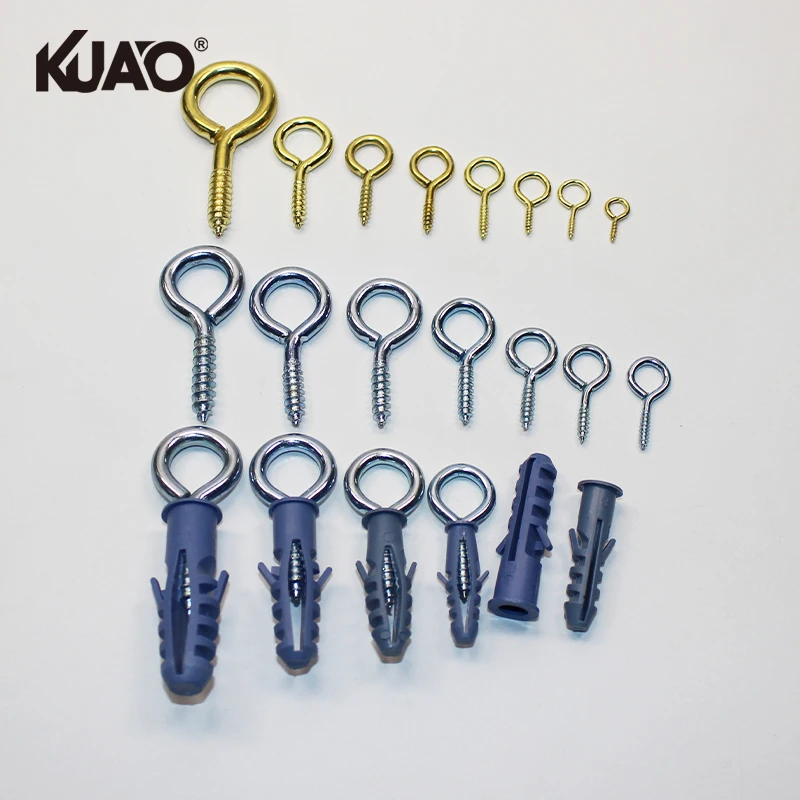
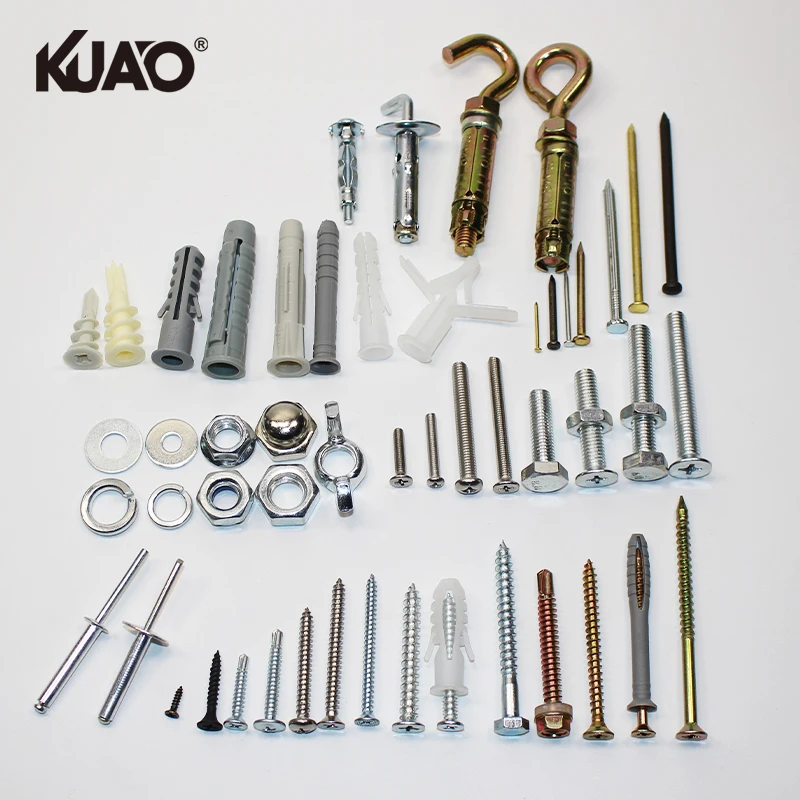
For builders, contractors, and procurement teams sourcing anchor bolts at volume, working with a supplier that maintains broad stock across anchor bolt types, sizes, and surface treatments helps reduce lead time and simplify specification. Dongyang Kuaou Hardware carries anchor bolts as part of a 7,000+ SKU fastener range, with OEM and shelf-ready packaging options suited to hardware retail and distribution channels.
 Hot News