
 EN
EN
Pipe Clamps for DIY Furniture and Home Repair
Picture this: you've just spent the afternoon cutting and sanding boards for a dining table, the glue is applied, and you need something to hold it all together while it sets. Or maybe you're under the kitchen sink, staring at a sweating copper pipe that needs support before it starts dripping. Either way, a pipe clamp is probably the tool you need — and once you understand how they work, you'll wonder how you managed without one.
The term "pipe clamp" actually covers two related but distinct tools. For woodworkers and furniture builders, a pipe clamp refers to a clamping head set that threads onto standard iron pipe, creating an adjustable wood-pressing clamp of almost any length. For home repair and plumbing tasks, a pipe clamp is a metal ring or bracket used to secure pipes to walls and joists, or to temporarily seal a leak. If you've ever asked yourself which type you need, or how to use either effectively, this guide is for you.
Two Types of Pipe Clamps, Two Different Jobs
Think of it this way: the woodworking pipe clamp is like a long-distance grip, designed to squeeze wide panels together with even, steady pressure. The plumbing pipe clamp is more like a bracket or a band-aid — it holds pipes in place, reduces vibration, or seals small cracks. Both are called pipe clamps, but they solve very different problems.
Woodworking Pipe Clamps (Furniture and Panel Assembly)
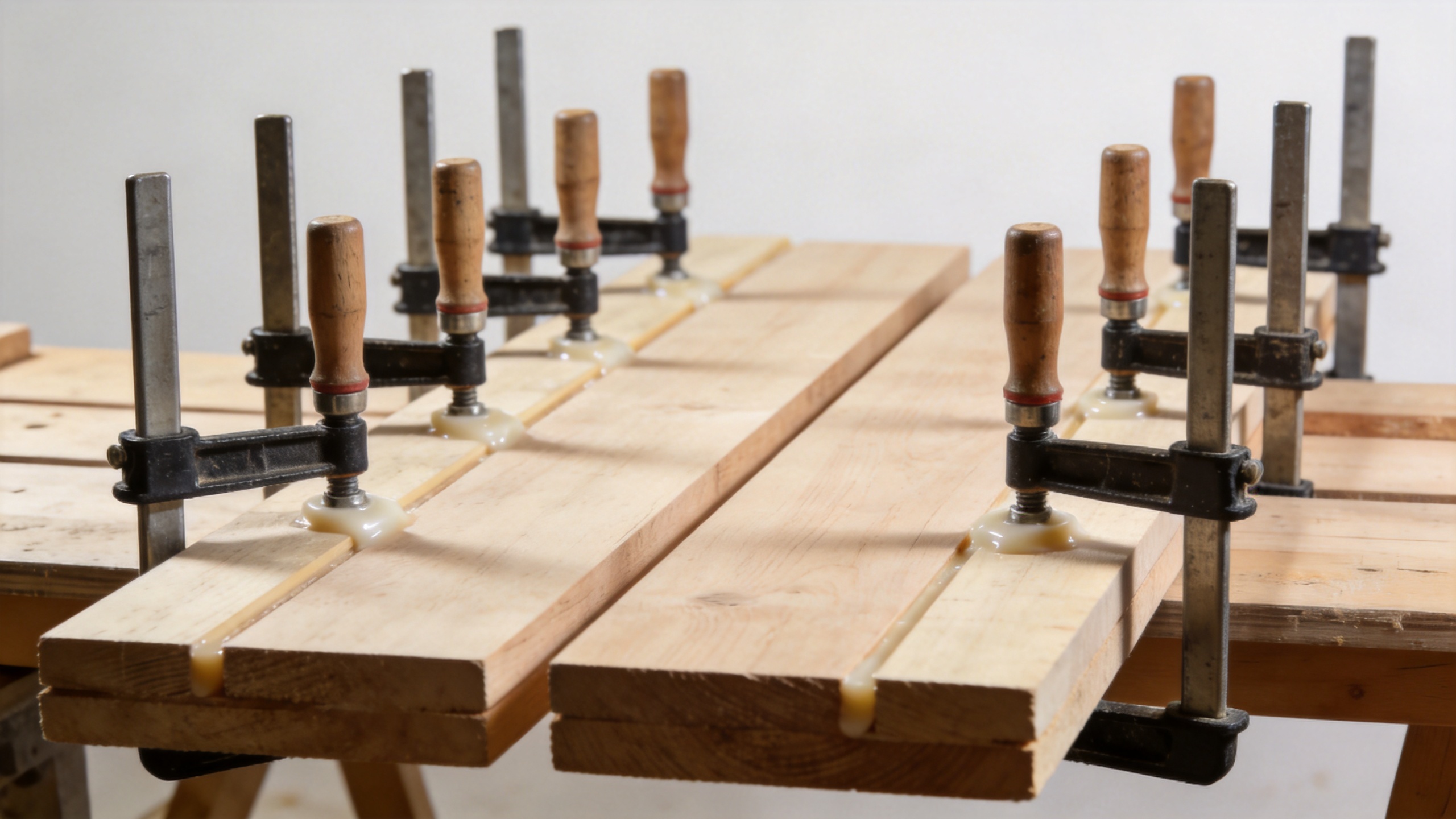
A woodworking pipe clamp consists of two parts: a fixed jaw (the tail stop) that slides onto the end of a threaded black iron pipe, and an adjustable head with a screw mechanism that does the actual clamping. You buy the heads as a set and source the pipe separately to whatever length you need. This modularity is what makes pipe clamps so popular among DIY furniture builders. A 36-inch setup including pipe runs around $20 to $25 making it one of the most cost-effective ways to clamp wide panels.
The real question for beginners is: 1/2-inch pipe or 3/4-inch pipe? If your project involves lightweight frames, smaller boxes, or occasional glue-ups, half-inch pipe works well and is easier to handle. But if you're building wide tabletops, kitchen cabinet carcasses, or large furniture panels, 3/4-inch pipe delivers noticeably more rigidity and reduces the flex that can cause uneven clamping pressure. For most home furniture projects, 3/4-inch is the better starting point.
One thing real DIY users quickly learn: the installation situation is rarely the clean workshop you imagine. More often you're working on the garage floor, kneeling on tile, using one hand to align boards and the other to turn the clamp handle. That's actually where pipe clamps shine: the wide jaws and self-aligning design make them forgiving to use with no fancy workbench required.
Plumbing Pipe Clamps (Home Repair and Pipe Support)
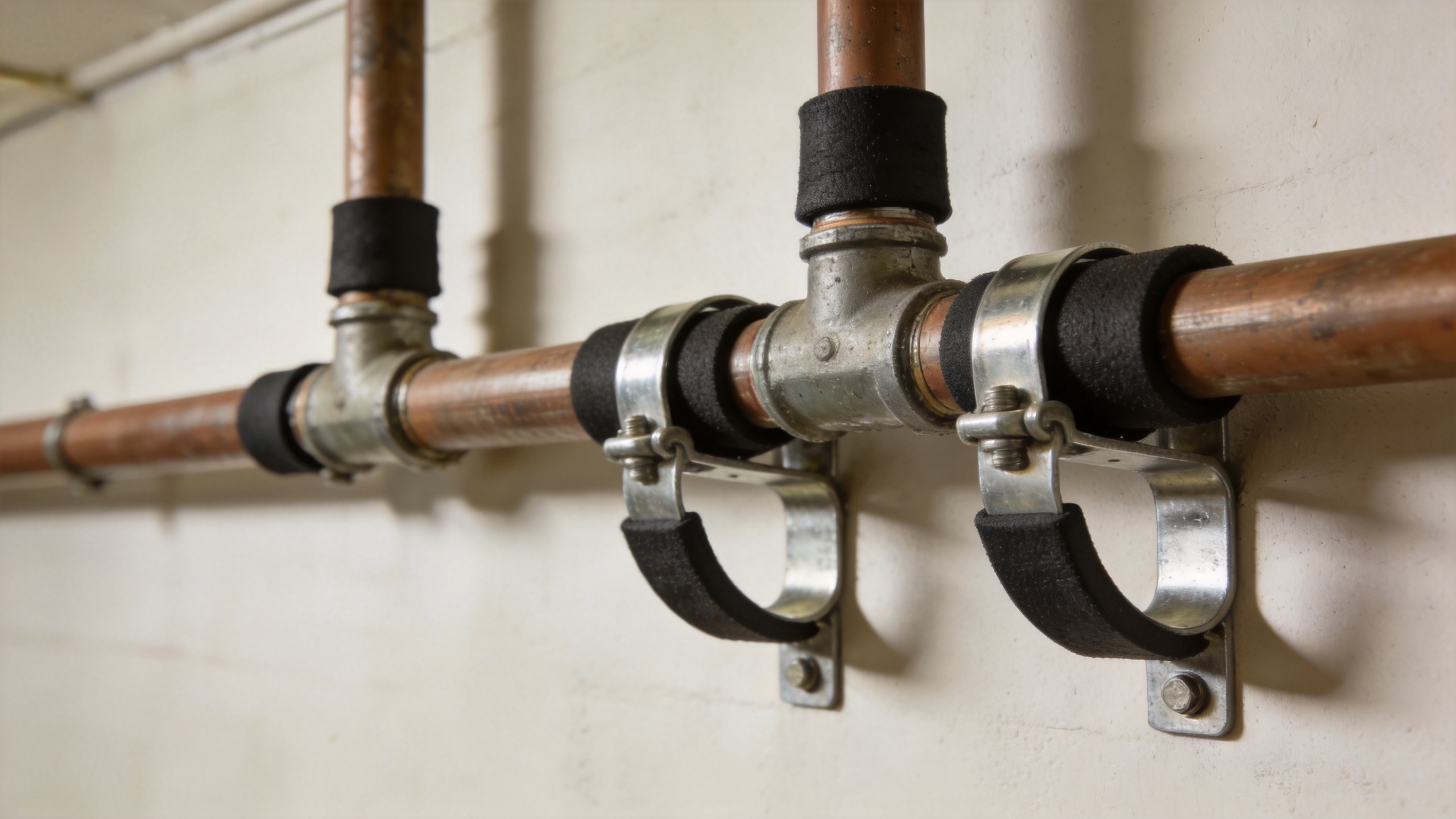
For home repair, a pipe clamp is a band-style or saddle-style fitting used to secure pipes along walls, floors, and ceiling joists, or to clamp a repair sleeve over a leaking pipe section. Residential plumbing typically uses pipes from 1/2-inch up to 2-inch in diameter. When selecting a plumbing pipe clamp, the critical measurement is the outside diameter (OD) of your pipe — a clamp that's too loose will rattle and allow vibration damage, while one that's too tight can deform the pipe over time.
If you're supporting a run of copper or PEX tubing, look for rubber-lined or cushioned pipe clamps. The rubber layer prevents metal-on-metal contact, which reduces corrosion and dampens vibration — two common causes of accelerated wear in home plumbing systems. For outdoor or below-ground applications where moisture is a factor, stainless steel or heavy zinc-coated clamps hold up much better than standard galvanized versions.
Choosing the Right Pipe Clamp for Your Project
Before you buy, ask yourself one practical question: what is this clamp actually holding, and in what environment?
- Furniture assembly or panel glue-up: Go with a pipe clamp head set in 3/4-inch size for most projects. Buy pipe in the lengths that fit your project: 24-inch, 36-inch, and 48-inch cover most furniture builds. Look for clamps with a flat, wide jaw face to avoid denting softer woods.
- Indoor pipe support (dry conditions): Standard galvanized or zinc-coated clamps work well. Size them to match your pipe OD precisely. Two-hole strap clamps are ideal for long horizontal pipe runs.
- Humid or wet areas (under-sink, bathroom, basement): Choose rubber-lined clamps or stainless steel hardware. The moisture-resistance difference is not cosmetic — a rusted pipe support can fail quietly over years.
- Temporary leak repair: Use a repair-type pipe clamp with a rubber gasket and a stainless steel band. These are not a permanent fix, but they buy you time until a proper repair is made.
How to Use Pipe Clamps for a Furniture Glue-Up
The process is straightforward once you've done it once:
- Lay the pipe flat across a pair of sawhorses or directly on the floor. Position the tail stop near one end, and the adjustable head at the other.
- Apply your wood glue, align your boards, and set them down across the pipes with the clamps positioned roughly every 12 to 16 inches along the panel width.
- Tighten the clamp handles until you see a thin, continuous bead of glue squeeze out from all joints — that tells you the pressure is even and the joint is solid.
- Check for bowing by sighting down the panel edge. If the center arches up, alternate clamping above and below the panel to counteract the lift.
- Let it cure for the time your glue specifies ; typically 30 to 60 minutes for initial set, though overnight is safer for structural pieces.
This isn't unlike clamping a sandwich together with your hands — you're applying even, distributed pressure across a wide area until things bond. The pipe clamp just does it with far more force and far less effort.
Pipe Clamp Materials: What to Look For
The material of a pipe clamp determines its durability and suitability for different environments. For woodworking heads, cast iron and malleable iron are the most common materials, heavy enough to stay put and durable enough for years of shop use. Avoid very cheap imports where the screw mechanism feels rough or gritty; a worn screw thread turns a clamp into a frustration.
For plumbing-style pipe clamps, the choice usually comes down to galvanized steel (affordable, good for dry indoor use), stainless steel (preferred for outdoor, coastal, or wet environments), and rubber-lined varieties (vibration dampening plus corrosion protection between clamp and pipe).
Generally speaking, if your intended use is in a dry interior and you're not planning to leave the clamp in place permanently, standard galvanized hardware is fine. If the clamp is going somewhere it will stay — behind a wall, under a floor, exposed to moisture — spend a bit more on stainless.
Getting Quality That Lasts
Hardware that holds furniture together or supports your home's plumbing isn't the place to cut corners. Consistent thread quality, reliable jaw alignment, and dimensional accuracy matter more than they might seem at the hardware store shelf.
Whether you're assembling a custom dining table or making sure your bathroom pipes are properly supported, the right pipe clamp — sized correctly and made to an appropriate standard — does its job quietly and reliably for years. That's exactly what good hardware should do.
 Hot News