
 EN
Understanding Washer Types for Construction 2026
In construction work, a washer is a small part with an outsized effect on joint reliability. It can spread clamp load, protect a finished surface, bridge an oversized hole, or help a bolted assembly retain tension. It is easy to treat every washer as a generic metal ring, but the joint should drive the choice: the fastener size, the material beneath the head or nut, the expected load, movement, moisture, and the project specification.
From a fastener-engineering viewpoint, the washer choice should follow the load path rather than the appearance of the hardware. A washer that works well on a light-gauge panel may be unsuitable for a structural connection. Likewise, a corrosion-resistant washer does not automatically solve a joint that needs a hardened bearing surface or a defined preload procedure.
What a washer does in a construction joint
A washer sits under a bolt head, nut, screw head, or another bearing surface. Its first job is often to distribute force over a larger area. That reduces the chance that a nut or head dents wood, pulls through thin metal, damages paint, or sinks into a softer substrate. Depending on its geometry, a washer can also create spacing, guide alignment, compensate for a larger hole, or add a controlled spring effect.
For construction buyers, the key distinction is between a washer selected for bearing area and one selected for joint retention. A broad plain washer helps spread load. A spring or locking design is intended to influence tension or resistance to rotation in an appropriate assembly. These functions overlap only occasionally, so one should not be substituted for another without checking the design intent.
Common washer types and where they fit
Flat washers: the general load-spreading choice
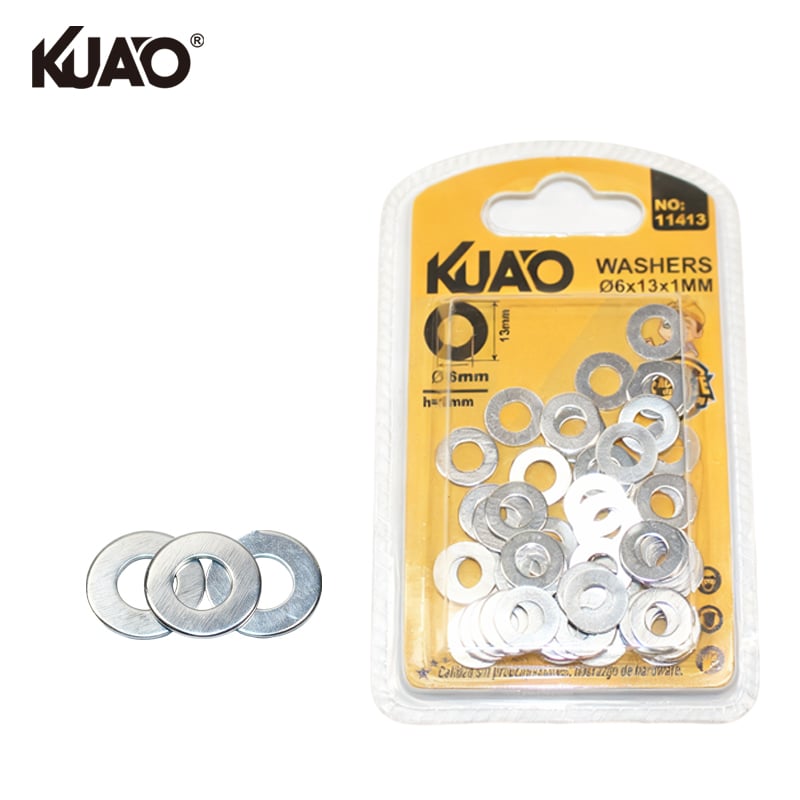
A flat washer is the familiar round, flat washer with a central hole. It is commonly used where the joint needs a clean bearing surface and moderate load distribution. In timber framing, sheet metal work, brackets, and general equipment installation, a flat washer can help prevent a fastener from embedding into the material. Match the inside diameter to the fastener and make sure the outside diameter gives enough bearing area without interfering with nearby features.
Do not assume that a standard flat washer is suitable for every high-load connection. For structural bolting, the project documents may call for a specific hardened washer. ASTM F436, for example, covers hardened, heat-treated washers used with high-strength structural bolts. The designation, dimensions, coating, and compatible bolt assembly must be verified against the specification.
Fender and large-OD washers: when thin or soft materials need support
A fender washer has a relatively large outside diameter compared with its hole size. That larger footprint is useful when fastening thin sheet, softer timber faces, insulation-related accessories, or brackets with an oversized opening. The washer distributes force over more material, which can reduce pull-through and visible surface damage.
Large-OD does not mean unlimited capacity. Check the thickness and material grade as well as diameter. A thin, wide washer can deform under high clamping load, so it should not be selected simply because it covers a large hole.
Square washers: broad bearing for timber and construction hardware
Square washers provide a wide bearing area and are often associated with timber connections, anchor applications, and hardware where a round washer may not give the desired coverage. Their shape can be helpful where grain direction, slotted details, or a rectangular plate calls for broader support. As with any washer, confirm edge distances and avoid configurations that concentrate force near a split-prone timber edge.
Spring washers: maintaining force in selected assemblies
Spring washers use a formed shape—such as a wave, conical disc, or split configuration—to deliver elastic response as the joint is compressed. They can be useful where small movements, settling, or temperature changes influence clamp force. Belleville-style disc washers are designed to provide high spring force in a compact axial space, while wave washers are more commonly associated with lighter preload and travel requirements.
One practical limitation is that a spring washer is not a universal vibration cure. Dynamic joints should be designed as systems: bolt grade, preload, surface condition, joint stiffness, locking method, and installation control all matter. Follow the assembly specification rather than adding a spring washer as an afterthought.
Lock washers: resisting rotation where appropriate
Lock washers may be split, toothed, or otherwise shaped to increase resistance to loosening. External-tooth and internal-tooth styles are often used in lighter-duty assemblies where their teeth can bite into mating surfaces. They can mark coatings or soft materials, so they are a poor choice where finish protection matters. In demanding vibration service, engineers may specify other locking approaches, such as prevailing-torque nuts, wedge-lock systems, or thread-locking compounds, depending on the joint and service conditions.
Hardened structural washers: for specified high-strength bolted joints
Hardened washers are not just thicker flat washers. In structural applications, they provide a durable bearing surface that resists excessive deformation under high clamping force. When a drawing or governing standard calls for a structural washer, use the specified compatible component and installation method. Substituting a general-purpose washer can change bearing behavior and undermine the intended bolted-joint performance.
Choose washer material and finish for the environment
Material selection is part of washer selection. Carbon steel may be appropriate for protected indoor work, while zinc-plated finishes can provide a basic level of corrosion protection in suitable environments. Stainless steel is often considered for wet or outdoor exposure, but grade selection and galvanic compatibility still need attention. Pairing dissimilar metals in a damp environment can increase corrosion risk, especially where water is trapped beneath the washer.
For coated steelwork, consider whether a toothed washer will damage the coating. For treated timber, consult the fastener and connector guidance because chemical exposure can affect corrosion performance. A washer should be compatible with both the fastener and the material it bears against, not selected in isolation.
A field checklist before you order
- Identify the joint purpose. Is the washer spreading load, covering a hole, protecting a surface, adding spring action, or meeting a structural specification?
- Confirm fastener compatibility. Check nominal bolt or screw size, hole clearance, thread engagement, head or nut bearing diameter, and available space.
- Assess the substrate. Thin sheet, softwood, concrete hardware, coated steel, and structural steel each place different demands on the washer.
- Review load and movement. Static clamping and a cyclic, vibrating connection should not receive the same default hardware package.
- Check environment and finish. Account for moisture, outdoor exposure, chemical contact, and dissimilar-metal combinations.
- Read the project documents. Where a standard, drawing, or engineer specifies a washer type, grade, or coating, that requirement overrides generic selection habits.
Practical sourcing considerations for 2026
For distributors, contractors, and private-label hardware programs, clear washer specifications reduce costly mix-ups. State the type, material, finish, inside diameter, outside diameter, thickness, and applicable standard. If washers are packed with bolts, keep the combination and labeling consistent across batches. Dongyang Kuaou Hardware supports OEM and ODM hardware programs, including fastener assortments and shelf-ready packaging; buyers can use a defined specification sheet to align sampling, packaging, and repeat orders.
A simple selection rule still helps: choose a flat washer when the need is bearing area, a larger washer when the substrate needs broader support, a spring or locking solution only when the joint design calls for it, and a hardened structural washer when the specification requires one. When the connection is safety-critical, have the final washer choice reviewed against the governing design and installation requirements.
Frequently asked questions
What is the most common washer for general construction?
A flat washer is the common starting point for general construction because it provides a bearing surface and distributes load. The correct size, thickness, material, and finish still depend on the fastener, substrate, and environment.
When should I use a fender washer?
Use a fender washer when a larger bearing area is needed around a small fastener hole, particularly on thin or softer materials. Verify that the washer thickness and grade are adequate for the applied clamping load.
Are lock washers required for every vibrating connection?
No. Vibration resistance depends on the entire joint design and the project specification. A lock washer may be appropriate in some assemblies, but it is not a blanket substitute for a properly designed preload and locking strategy.
 Hot News