 EN
Carabiner Clips for Hanging and Storage Solutions
A carabiner is one of those small hardware pieces that can make a storage system feel much more deliberate. In a garage, workshop, utility room, retail display, or travel kit, a simple clip can gather loose items, create a quick hanging point, and make frequently used gear easier to retrieve. The useful question is not simply, “Which carabiner is strongest?” It is, “Which clip fits the item, the mounting point, the environment, and the way people will actually use it?”
For hanging and storage, a good carabiner helps turn vertical space into usable space. It can hold a bundle of light tools on a rail, keep cords together, connect baskets to a pegboard, or organize accessories on a shelf end. But those applications are different from climbing, rescue, fall protection, or any other life-safety use. Read the product marking and instructions. A utility carabiner that is not specifically rated for a safety-critical job must not replace certified equipment.
Start With the Storage Problem, Not the Clip
Before choosing a carabiner, identify what needs to be hung and why it is currently inconvenient. Is the item light but awkward, such as extension cords, gloves, tags, or small hand tools? Does it need to be removed several times a day? Will it stay indoors, or sit in a damp shed, vehicle, or covered outdoor area? These answers guide a suitable choice beyond a product photo alone.
For example, a clip used to group lightweight accessories may benefit most from a smooth gate and a compact shape. A carabiner used with a storage basket or hanging organizer may need a wider opening so it can pass around a rail, hook, or pegboard bracket. When the storage point is crowded, a narrow profile can make the whole setup easier to scan and use.
That shift matters. Instead of asking whether one carabiner is generally better, ask whether it is sufficient for the load, opening size, frequency of use, and environment in your own storage plan.
Choose a Shape That Works With the Hanging Point
The shape of a carabiner affects how it sits on a hook and how easily items move around inside it. A compact D-shaped clip often gives a tidy connection for everyday organization. An oval-style clip can provide a more balanced interior for small bundles or accessory loops. Larger utility clips may be convenient when a wide gate opening is more important than a slim profile.
- Compact clips: useful for key rings, gloves, cable loops, and lightweight accessories.
- Medium clips: practical for hanging tool pouches, small baskets, or grouped storage items when the load stays within the product’s stated limit.
- Wide-opening clips: helpful when a carabiner must attach to thicker rails, shelf supports, or multiple loops at once.
- Locking or gated options: worth considering when accidental opening would scatter contents or create a nuisance, but not as a replacement for safety-rated hardware.
A gate that opens easily is convenient, although a gate that is too loose can be frustrating in a busy storage zone. If people will grab the same items repeatedly, test the motion with gloves or one hand. A storage system only works when the carabiner is easy enough to return to its proper place after every use.
Match Material and Finish to the Environment
Material choice is not a universal ranking. Aluminum can be appealing when low weight and easy handling are priorities. Steel may be a practical option where the clip will see more contact, abrasion, or a sturdier feel is desired. The right carabiner depends on the manufacturer’s stated specifications, the expected load, and the conditions around it.
For dry indoor storage, the visual finish and the smoothness of the gate may matter more than weather resistance. In garages, laundry areas, sheds, or coastal locations, moisture and surface wear deserve more attention. Check the product’s finish, care instructions, and stated use conditions rather than assuming any metal carabiner will perform the same way outdoors. If corrosion, load, or safety is a concern, verify the exact product data before installation.
Build Storage Zones That Are Easy to Maintain
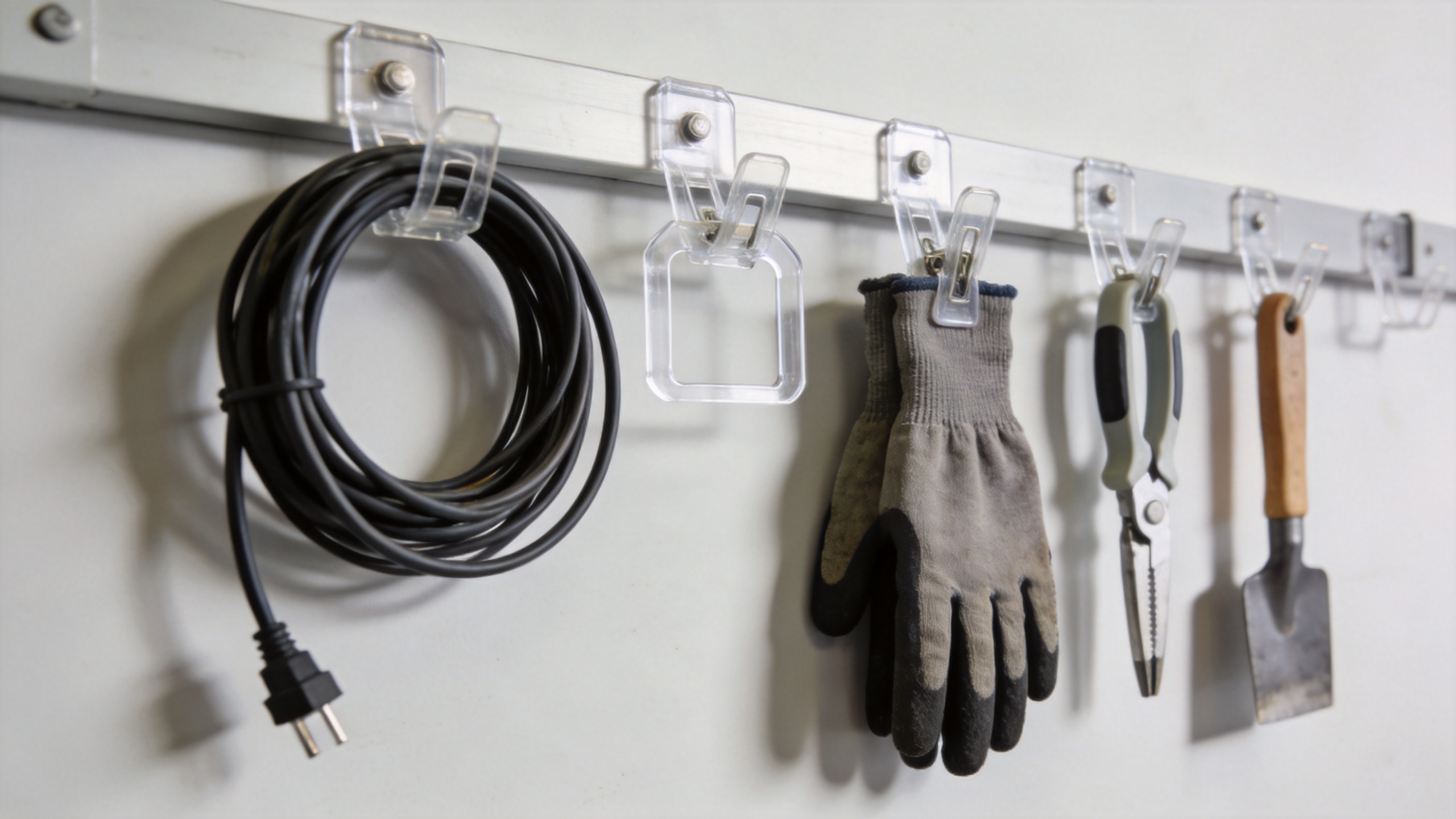
The most effective hanging systems assign each carabiner a job. A row on a pegboard might separate cords, measuring tools, protective accessories, and refillable supply bags. Near an entryway, clips can keep umbrellas, tote bags, leashes, or reusable shopping bags off the floor. In a retail-ready hardware assortment, a carabiner can also support how buyers understand the product: a clear size label, intended use, and visible load guidance help reduce avoidable selection mistakes.
There is a common mistake here: organizing by available empty space rather than by use sequence. If a cord is routinely removed before a tool bag, sharing a crowded clip creates friction. Instead, give high-frequency items their own hanging point and reserve shared clips for lightweight bundles. In practice, that can make a modest wall rail more useful than a larger but poorly organized storage area.
A Simple Decision Table
| Storage situation | What to check on the carabiner | Practical note |
|---|---|---|
| Keys, tags, gloves, small accessories | Compact size, smooth gate, comfortable handling | Choose a clip that is quick to attach and remove. |
| Cords, straps, or light bundled gear | Gate opening, interior space, stated load limit | A larger carabiner can reduce tangling and crowding. |
| Pegboard or rail organization | Fit around the rail, profile depth, finish | Confirm that the clip will not interfere with adjacent items. |
| Damp or semi-outdoor storage | Material, coating, care guidance, product-specific suitability | Inspect periodically and replace damaged hardware. |
Safety and Labeling Come First
It is tempting to treat every carabiner as a general-purpose connector. That is not a safe assumption. Storage clips should be used only for the non-safety applications their maker identifies. Do not use a utility clip for climbing, fall arrest, lifting people, rescue, or any application where failure could cause injury. Do not exceed the marked working limit, and do not rely on a clip with a bent gate, sharp edge, heavy corrosion, cracking, or uncertain origin.
For retailers and private-label buyers, clear packaging is part of responsible product selection. A useful package communicates size, material, intended storage use, care advice, and any important limitation in language the end user can understand. Dongyang Kuaou Hardware supports OEM and ODM hardware programs, including shelf-ready packaging, so buyers can align clip assortments, labeling, and display needs with their target sales channel.
Use a Short Carabiner Selection Checklist
Before ordering or setting up a storage zone, pause for a brief carabiner check. First, weigh or estimate the real load, including every item that will share the clip. Second, compare the carabiner gate opening with the rail, hook, or loop it must pass around. Third, confirm that the stated use and load information match the job. Fourth, consider whether the clip will be exposed to moisture, cleaning chemicals, rubbing, or frequent opening. Finally, keep any clip marked for utility storage away from climbing, fall protection, rescue, or lifting people.
This small checklist also helps buyers specify a carabiner assortment more clearly. Rather than requesting a general clip, they can define the intended storage scenario, size range, material preference, packaging language, and display method. That helps buyers compare options and understand the selected carabiner.
Carabiner Placement Ideas for Everyday Storage
A carabiner can make a cord station easier to reset after each use. A separate carabiner can keep gloves paired beside a workbench. On a utility cart, one carabiner may hold a lightweight accessory bag, while another carabiner keeps a measuring tape loop visible. In a mudroom, a carabiner can gather reusable bags; in a vehicle, a carabiner can help prevent light loose items from rolling around.
For a pegboard, assign one carabiner per frequently reached category instead of crowding several categories onto one clip. For a retail display, match the carabiner size to the card, hook, or bin hardware so shoppers can inspect it easily. For a travel kit, choose a carabiner that closes cleanly around the intended loop. For a cleaning closet, place each carabiner where the item can air out and be returned without tangling.
These are organization examples, not load-rating advice. Every carabiner should be used only as its labeling permits. Inspect a carabiner before reuse if its gate drags, its body is damaged, or its finish shows substantial wear. When a storage task changes, reassess the carabiner, the mounting point, and the total load together.
Make the Final Choice Easier
A well-chosen carabiner does not need to solve every hanging task. It should simplify a repeated task within the product’s stated limits. Begin with the item and environment, confirm the gate and shape fit the hanging point, then review material, labeling, and load guidance. That practical sequence produces storage solutions that are easier to use, easier to replenish, and easier to keep organized.
 Hot News