A washer’s primary mechanical function is to spread the clamping force of a bolt or screw across a larger bearing area. Without one, tightening torque concentrates directly under the fastener head—creating excessive pressure per square inch (PSI) that easily exceeds the compressive strength of soft substrates like particleboard, MDF, and plywood. This leads to surface indentation, crack propagation, or joint failure. Inserting a flat washer redistributes load radially, often cutting effective PSI by 50% or more—depending on the washer’s outer diameter relative to the bolt shank. For example, lab testing by a leading fastener engineering group (2022) found that an M6 bolt without a washer crushed 16 mm particleboard at just 400 PSI, while the same bolt with a 12 mm OD washer sustained full torque with no visible deformation. This load-spreading effect is essential for knockdown furniture, where repeated assembly cycles and dynamic loads stress joints over time. In plywood, washers also bridge natural grain variations—preventing the fastener head from sinking into softer earlywood layers—and transform fragile point-loaded connections into durable, stable joints.
Washers serve as a sacrificial barrier between fastener and workpiece, protecting both aesthetics and integrity. Torquing a nut or bolt head can scratch, mar, or chip painted, veneered, or laminated finishes—especially with sharp-edged hardware. A finishing or nylon washer provides a smooth, non-marring interface that preserves surface quality. In wood, initial screw driving without a washer increases the risk of splitting near board edges; the washer absorbs radial outward force and limits over-countersinking. For visible hardware, brass or stainless steel finishing washers add polish while resisting rust stains. Washers also mitigate galvanic corrosion by isolating dissimilar metals—and sealing washers with bonded neoprene create moisture-tight barriers in humid or outdoor settings, preventing water ingress that causes rot or swelling. By decoupling installation torque from the surface, washers extend service life and maintain appearance.
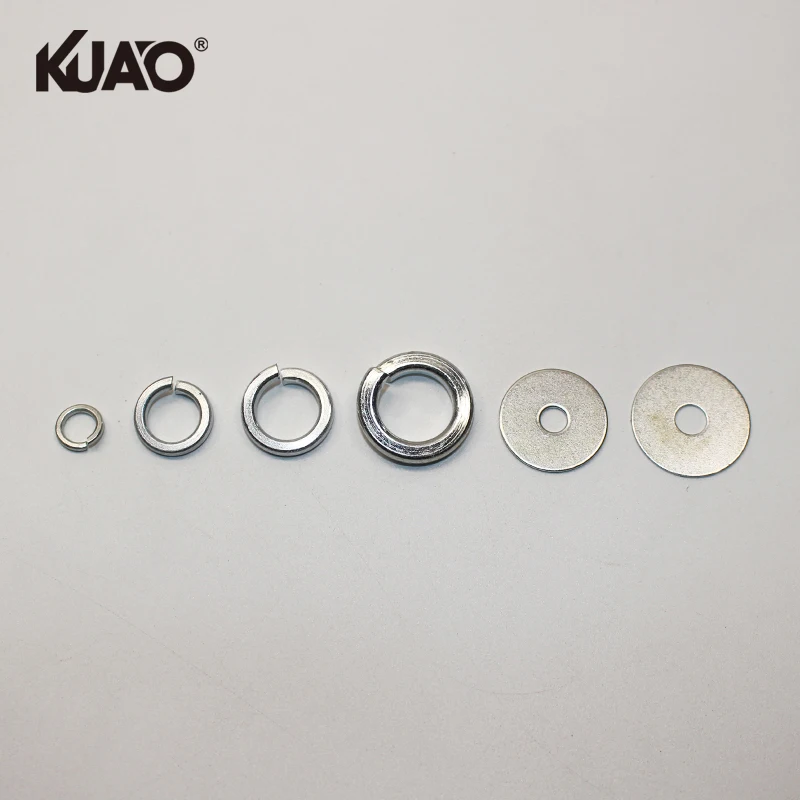
Flat washers are the structural backbone of furniture assembly. A simple metal disc under the bolt head or nut spreads clamping force over a wider area, dramatically reducing localized pressure on soft materials like particleboard or plywood—preventing sink-in and long-term loosening. Standard Type A washers offer compact sizing for general use; thicker, wider Type B variants suit heavier components or oversized holes. Their downside? Full visibility, which may clash with clean, finished designs.
Finishing (countersunk) washers prioritize appearance without sacrificing function. Designed to nest flush with flat-head screws, they disappear into the surface—ideal for cabinet faces, decorative hardware, and fine furniture. Their smaller bearing surface delivers less load distribution than flat washers, making them best suited for light-load, high-visibility applications. When structural integrity is paramount, the hidden support of a flat washer wins. Where aesthetics define success, finishing washers deliver seamless integration.
Fender washers stand out for their oversized outer diameter and thin profile—ideal for bridging large, misaligned, or worn holes. Their broad footprint provides solid bearing support even on thin or weak substrates like metal brackets or hollow-core panels, where standard washers might pull through. That wide load spread also helps prevent cracking during assembly in brittle materials.
Sealing washers solve a different challenge: moisture intrusion. Built with bonded rubber or neoprene rings, they form watertight seals under fastener heads—critical in bathroom vanities, outdoor furniture, or kitchen cabinets where water creeping along threads could cause corrosion or wood swelling. For projects needing both span support and moisture resistance, hybrid fender-style sealing washers offer integrated protection. Together, these types deliver targeted solutions—span support for compromised substrates and sealing for damp environments.
Nylon and polymer washers shine where metal would damage surfaces or loosen silently. Their controlled compressibility lets them deform under load—absorbing vibration and preventing self-loosening in moving parts like drawer slides or adjustable hinges. This dampening reduces noise and protects substrates from cyclic stress. Because they’re non-marring, they prevent scratches and indentations on soft wood, veneer, or painted finishes. They also provide electrical insulation—valuable in DIY builds near wiring—and isolate dissimilar metals to avoid galvanic corrosion. Choose nylon when you need lightweight, moisture-resistant performance and a non-metallic finish.
Stainless steel (304 or 316 grade) and brass washers deliver uncompromising durability and long-term stability. Stainless resists rust in damp outdoor, marine, or chemically exposed environments. Brass offers classic aesthetics, natural corrosion resistance, and reduced galling on softer screws—making it ideal for visible, decorative joints. Unlike polymers, these metals maintain high load capacity and resist creep under sustained pressure, ensuring fasteners stay tight. Use them in load-bearing applications—shelving frames, bed bases, or exterior furniture—where polymer washers would deform and undermine joint integrity.
Many DIYers skip washers entirely—especially when attaching legs to particleboard or plywood—leading to crushed material, wobbly joints, or stripped threads. Another frequent error is mismatching washer type: using a flat washer where a finishing washer is needed leaves hardware exposed and risks surface damage, while omitting a lock washer in high-vibration areas invites gradual loosening. Over-tightening with power tools can deform nylon washers or fracture split-ring types, nullifying their function. To avoid these pitfalls, always follow manufacturer guidance, match washer material and style to substrate and environment (e.g., nylon for soft wood, stainless for outdoor use), and tighten gradually with hand tools to gauge proper resistance. A small component—correctly applied—makes a lasting difference in furniture performance and longevity.
Washers protect materials by distributing load, preventing surface indentation, and protecting finishes. They also enhance joint stability and prevent loosening over time.
Flat washers prioritize structural support and load distribution, while finishing washers are designed for aesthetics, fitting flush with surfaces for a polished look.
Sealing washers are ideal for projects involving moisture-prone areas, such as bathroom vanities or outdoor furniture, as they create watertight seals under fastener heads.
Washers are made from metal, nylon, or polymers. Metals like stainless steel provide durability, while nylon is lightweight and ideal for non-marring, vibration-absorbing needs.
 Hot News
2025-12-16
2025-12-11
2025-06-05
2024-11-30

Dongyang Kuaou Hardware Co., Ltd.
Copyright © Dongyang Kuaou Hardware Co., Ltd. - Privacy policy

 EN
EN