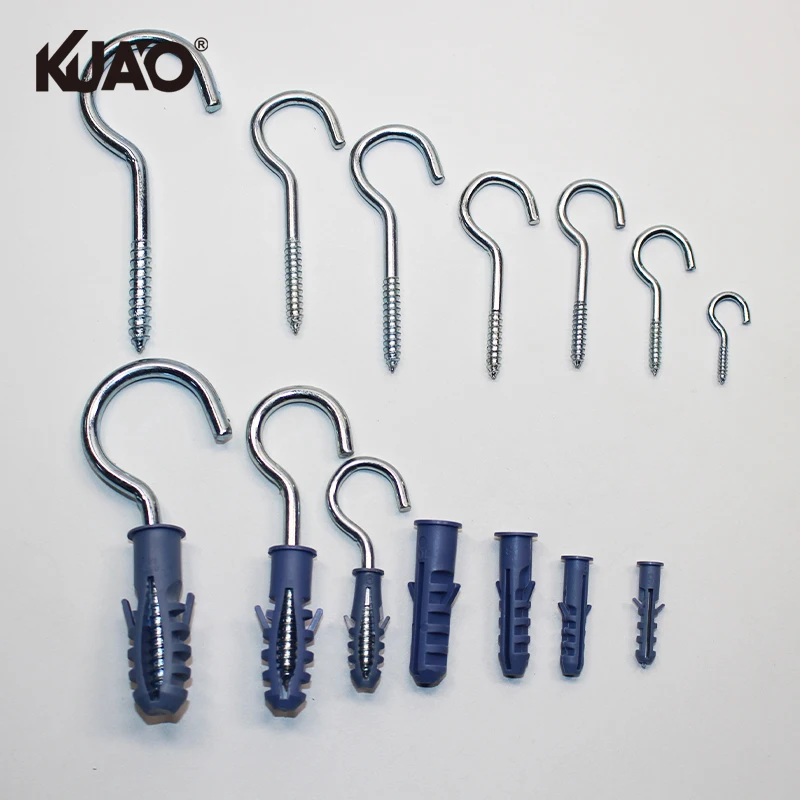
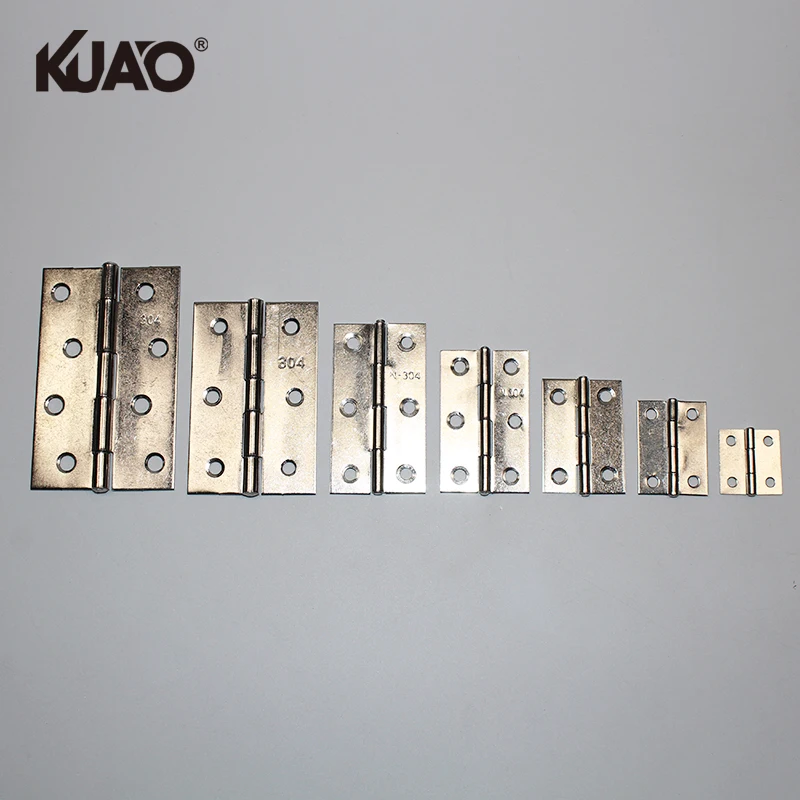
In the global construction, woodworking, and home improvement industries, selecting the right nails is the foundational step to ensuring structural integrity, long-term durability, and cost efficiency for every project. Whether you are a commercial building contractor, furniture manufacturer, hardware retail chain, or OEM brand partner, understanding the functional differences between nails types, sizing standards, material compatibility, and corrosion resistance is non-negotiable to deliver reliable results for your end users. At Dongyang Kuaou Hardware Co., Ltd., our 18 years of industry expertise has positioned us as a leading global supplier of industrial-grade nails, with a full catalog of precision-engineered nails tailored to every woodworking application, from delicate cabinetry to heavy structural framing. This guide breaks down the critical factors to choose the optimal nails for your woodworking projects, with actionable insights for B2B buyers, retail partners, and OEM collaborators alike.
Wrought iron nails—hand-forged since antiquity—offer superior shear strength, but are now primarily reserved for heritage restoration and historic preservation projects. Cut nails, machine-cut from solid iron sheets, deliver exceptional cross-grain holding power and remain the gold standard for historic flooring and heavy timber framing. Modern wire nails dominate 90% of global construction and woodworking applications due to their cost efficiency, dimensional consistency, and reliable performance. Our Kuaou Hardware wire nails achieve tensile strengths exceeding 580 MPa (per Carpentry Research Group, 2023), with full compliance to international construction standards, making them the preferred bulk supply choice for our global supermarket and construction partners. While their smooth shanks have limited withdrawal resistance in end-grain applications, our custom ring-shank and spiral-shank wire nails eliminate this gap for high-demand structural use cases.
|
Feature |
Wrought Nails |
Wire Nails |
|
Grip Strength |
High in cross-grain |
Moderate |
|
Splitting Risk |
Low |
Higher in thin stock |
|
Modern Use |
Heritage projects |
Framing, sheathing |
For delicate trim work and fine furniture assembly, 18–23 gauge brad nails from Kuaou Hardware reduce splitting by 78% compared to common nails (Carpentry Research Group, 2023), with a slim profile that leaves minimal visible holes for seamless finishing. 15–16 gauge finishing nails are engineered to conceal heads cleanly in cabinetry, millwork, and interior trim, with bulk packaging options optimized for retail shelf display and high-volume manufacturing. Box nails, with a slightly thinner shank than common nails, minimize fracture in dense hardwoods like oak and maple, ideal for custom furniture production. Clout nails, featuring wide flat heads and ribbed shanks, increase pull-out resistance by up to 40% in heavy timber framing. For exterior use—including decking, siding, and outdoor construction—our Kuaou Hardware hot-dipped galvanized clouts and ring-shank nails provide industry-leading corrosion resistance, outlasting non-coated fasteners by 5–7 years in humid climates.
The penny ("d") system remains the industry standard for nail sizing—originally tied to cost per hundred, now strictly dimensional. Each increment reflects a standardized length and diameter optimized for structural performance:
|
Penny Size |
Length (inches) |
Typical Use Case |
|
2d |
1" |
Craftwork, delicate trim |
|
4d |
1.5" |
Cabinet back panels |
|
6d |
2" |
Baseboards, light joinery |
|
8d |
2.5" |
Subflooring, ¾" stock assembly |
|
16d |
3.5" |
Structural framing connections |
Holding power scales predictably with both length and shank diameter: a 16d nail resists withdrawal forces three times more effectively than an 8d nail in softwood joints. Always ensure full penetration into the base member—especially in load-bearing assemblies—to avoid reliance on surface grip alone.
To prevent splitting in softwoods like pine or cedar—one of the most common causes of product waste and rework in high-volume production—apply the industry-standard 2.5× thickness rule: multiply the top board’s thickness by 2.5 to determine the optimal length of your nails. For 1-inch stock, use a 2.5-inch (8d) nail, ensuring approximately two-thirds embedment into the supporting member while avoiding tip protrusion. For ½-inch material, select 1.5-inch (4d) nails for clean, split-free installation. Our Kuaou Hardware blunt-tip softwood nails are engineered to further minimize splitting, even in high-speed automated nailing systems, with pre-drilling guidance included for all bulk orders when nailing within 1 inch of end grain or board edges.
Wood density and grain orientation fundamentally shape nail performance. Dense hardwoods—oak, maple, hickory—provide excellent holding power but require careful installation to avoid splitting. Softer species—pine, cedar, spruce—have looser fiber structures, demanding longer nails to achieve sufficient grip depth.
Nail orientation relative to grain is equally critical. Driving perpendicular to the grain maximizes holding power and minimizes splitting; angling parallel to grain lines increases fracture risk by 40% in hardwoods. End-grain connections remain inherently weak—use spiral or helical shank nails with corrosion-resistant coatings where possible.
|
Wood Type |
Nail Selection Focus |
Splitting Prevention Tip |
|
Hardwoods |
Shorter lengths, spiral shanks |
Pre-drill holes; avoid edges |
|
Softwoods |
Longer lengths, ring shanks |
Use blunt tips; follow 2.5× thickness rule |
Corrosion resistance directly impacts structural integrity and long-term safety—compromised fasteners contribute to an estimated $740,000 in annual structural damage claims. Indoor applications like furniture or interior framing can safely use uncoated steel nails. But outdoor, high-humidity, or chemically reactive environments demand purpose-built protection.
Note that electroplated zinc (under 10μm) degrades rapidly—failing within two years in wet climates—so always verify coating method and thickness for critical applications.
High-quality, application-matched nails are the cornerstone of reliable, long-lasting woodworking and construction—no premium lumber or expert craftsmanship can overcome the failure of poorly manufactured, incorrectly sized nails. By matching the exact nails type, shank design, size, and corrosion protection to your wood species, project requirements, and regional market needs, you’ll unlock consistent structural performance, reduced material waste, and cost-effective results for your business.
For industrial-grade nails tailored to your manufacturing, retail, or OEM application, or to pair bulk nails supply with a full suite of complementary hardware fasteners and home improvement accessories (as offered by Dongyang Kuaou Hardware Co., Ltd.), partner with a provider rooted in global hardware expertise. Kuaou Hardware’s 18 years of experience spans end-to-end OEM/ODM manufacturing, one-stop sourcing for global supermarkets and leading brands, and integrated supply chain solutions backed by a robust network of 300+ partner factories—contact us today for a no-obligation consultation and complimentary sample support to optimize your nails sourcing strategy.
 Hot News
2025-12-16
2025-12-11
2025-06-05
2024-11-30

Dongyang Kuaou Hardware Co., Ltd.
Copyright © Dongyang Kuaou Hardware Co., Ltd. - Privacy policy

 EN
EN