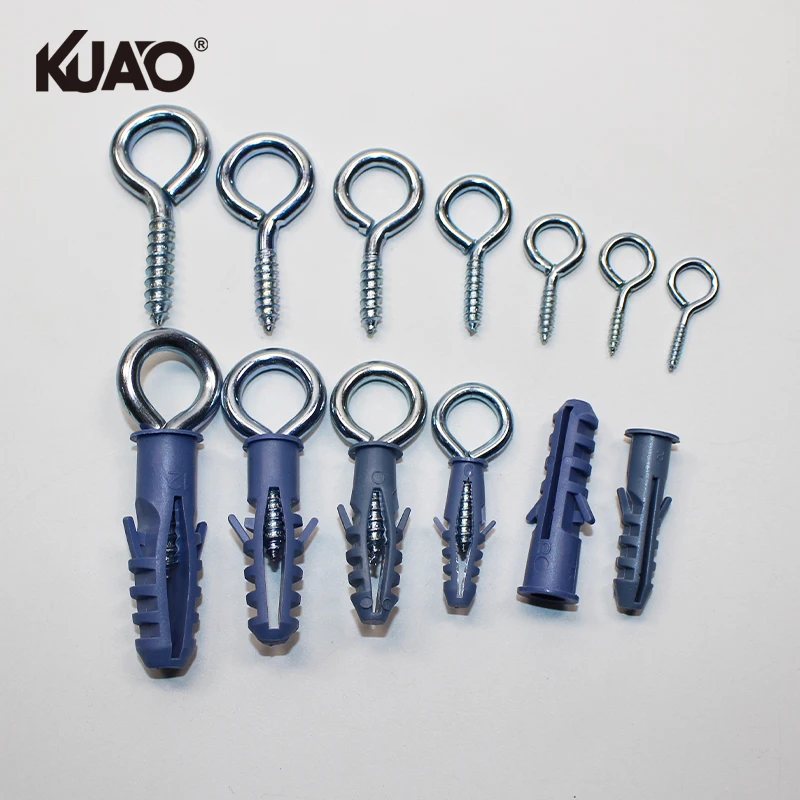
Eye hooks provide a reliable anchoring point for hanging heavy or decorative items on walls. For framed art or mirrors, choose a corrosion-resistant steel eye hook with a load rating at least four times the object’s weight—a 15-pound mirror, for example, demands a hook rated for 60 pounds or more. Always drive the eye hook into a wall stud, not just drywall; use a stud finder to locate the solid wood behind the plaster. Pre-drill a pilot hole slightly smaller than the screw shank to prevent splitting and ensure maximum thread engagement. For floating shelves, install two eye hooks at the same level, then loop coated wire or quick-link connectors through them. This distributes the load evenly and keeps the shelf from tilting. A level and measuring tape are essential tools to align the eyes precisely. Position the eye opening so the hanging wire or hook sits securely in the throat—this reduces the risk of accidental dislodgment. Regular inspection helps catch loosening before failure. By matching capacity to load and mounting correctly, you create a safe, gallery-quality display.
Eye hooks are an affordable solution for seasonal outdoor projects. Use lag-thread eye screws to anchor tarps over a patio or woodpile—their coarse threads bite into wooden beams or posts and resist pull-out under wind load. Select zinc-plated or stainless-steel eye hooks to withstand rain and humidity. For temporary event signage, screw eye hooks into fence boards or wooden stakes, then run strong cord through them. The closed loop provides a smooth, low-friction guide that prevents rope wear. When supporting lightweight plastic fencing or garden netting, space eye hooks every 3 to 4 feet along the top rail to keep material taut without tearing. For adjustable tension, pair a fixed eye hook with a turnbuckle on the opposite end—the eye hook remains stable while the turnbuckle shortens the connection. Inspect fasteners after storms and re-tighten as needed. Unlike open hooks, the closed-eye design eliminates slippage risk—a common failure point with basic hooks. This simple hardware choice makes temporary structures safer and easier to dismantle.
Eye hooks transform cluttered spaces into orderly workstations. Install a row of steel eye hooks along a ceiling joist or wall stud to route extension cords and air hoses overhead. Thread cables through the eye—the smooth interior prevents insulation damage—and keep them off the floor where they become tripping hazards. For lightweight rigging, such as suspending a bicycle or small kayak from the ceiling, use two eye hooks spaced to match the object’s hanging points. Run a rated rope or strap through the hooks and secure it with a carabiner. Always verify the hook’s working load limit; a typical ¼-inch eye hook in wood can hold 100 to 150 pounds when installed correctly. In a workshop, eye hooks and turnbuckles create an adjustable shelving system for lumber or power tools. The eyes act as anchor points for chain or cable, allowing you to raise or lower the load as needed. Avoid side-loading—the load should pull along the axis of the shank to prevent bending. By combining multiple eye hooks with minimal hardware, you can create a scalable, customizable storage network that evolves with your projects.
Selecting the correct eye hook begins with understanding how the fastener interacts with the base material. Lag eye bolts feature heavy-duty, coarse wood threads designed for solid framing members like studs, joists, or dense plywood. Their grip makes them ideal for hanging heavy mirrors, large floating shelves, or even supporting a porch swing. When installed with a properly sized pilot hole—typically 60–75% of the shank diameter—a 3/8-inch lag eye bolt can hold over 200 pounds in vertical tension. Eye screws have finer machine-screw threads and are typically paired with drywall anchors or plastic expansion plugs. They suit lighter tasks, such as securing a small picture frame or cable guide—but their pull-out resistance drops sharply under angled loads. Match the fastener to the structural surface: a lag eye bolt in a stud is secure; an eye screw in unsupported drywall is a failure waiting to happen.
The eye’s design dictates strength and safe use. Bent wire eye hooks are formed from a single piece of bent steel and lack a shoulder—they’re best for very light loads under 10 pounds and decorative uses like hanging keychains or small planters. Any sideways pull can easily deform the loop. Shoulder eye hooks incorporate a forged shoulder beneath the eye, reinforcing the shank and enabling safe angular loading up to 30 degrees without significant loss of capacity. This makes them the standard for garage rigging and heavier-duty home projects. Nut-type eye hooks pass through a hole and secure with a nut on the backside, offering maximum versatility for through-bolting into metal or thick wood when a clean, removable anchor is needed—ideal for custom shelving brackets and modular workshop setups.
Installing an eye hook in wood framing or plywood starts with a correctly sized pilot hole. Drill a hole about 60% of the eye hook’s shank diameter (for lag-type threads) or just slightly smaller than the root diameter of a screw-type eye. This prevents splitting while ensuring full thread engagement. Turn the eye hook clockwise until the shoulder or eye sits flush—stop when you feel firm resistance; overtightening can strip wood fibers. For maximum pull-out resistance, avoid end grain and, if the eye hook has a shoulder, seat it firmly against the surface. In softwoods, a washer behind the shoulder distributes load and reduces the chance of pull-through under heavy tension.
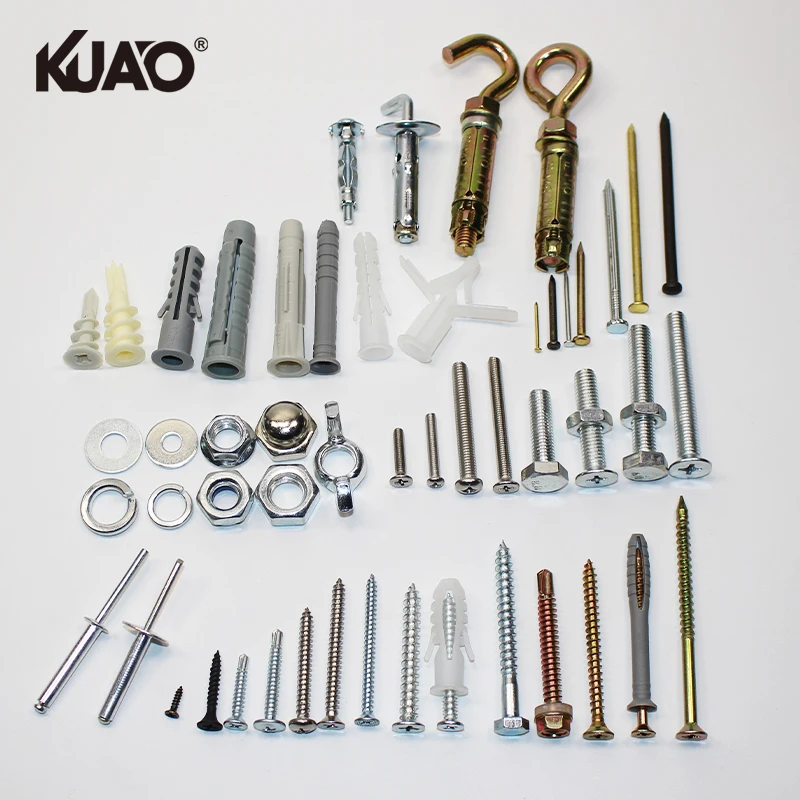
Eye hooks must never be screwed directly into drywall. Use a hollow-wall anchor—such as a toggle or screw-in type—rated for the intended load. Drill the anchor hole to the manufacturer’s specified diameter, insert the anchor flush, then thread the eye hook in until snug. For concrete or brick, use a hammer drill to create a hole for a drop-in or sleeve anchor. Clean all dust from the hole, set the anchor, and tighten the eye hook to the anchor’s recommended torque. Over-tightening can crack concrete or strip the anchor, so follow torque limits closely. Always verify the anchor is fully expanded and the eye hook is securely seated before applying any load.
Even a small eye hook can become a serious hazard when installed or used incorrectly. Always inspect the eye and shank for bends, cracks, or distortion before starting any project. Verify that the eye hook’s working load limit (WLL) matches the weight of your item—plus any dynamic forces—and never exceed that rating. For overhead or heavy-duty applications, a shoulder-type eye hook resists bending far better than a bent-wire or non-shoulder design. Align the eye with the direction of pull: side-loading can reduce capacity by up to 75%. Use a properly sized pilot hole in wood, a high-quality toggle or screw anchor in drywall, and a torque wrench to avoid over-tightening, which can fracture the material or strip threads. Never modify an eye hook by bending, welding, or cutting it—and replace any component showing signs of wear. These habits dramatically reduce the risk of sudden failure, protecting both your project and the people around it.
For heavy loads, lag eye bolts are ideal because they feature coarse wood threads that provide a strong grip for solid framing members.
No, eye hooks should never be screwed directly into drywall. It’s essential to use anchors such as toggle bolts or screw-in anchors for proper support.
Drill the correctly sized pilot hole before installation, and make sure the eye hook is seated firmly but not over-tightened to avoid stripping or fracturing the material.
Yes, provided you use a properly rated eye hook with a shoulder design, and the installation aligns the eye with the direction of pull to prevent side-loading.
Use zinc-plated or stainless-steel eye hooks for outdoor applications as these materials resist corrosion due to rain and humidity.
 Hot News
2025-12-16
2025-12-11
2025-06-05
2024-11-30

Dongyang Kuaou Hardware Co., Ltd.
Copyright © Dongyang Kuaou Hardware Co., Ltd. - Privacy policy

 EN
EN