For homeowners seeking a permanent, stainless steel delivers exceptional durability. Its corrosion resistance originates from a minimum 10.5% chromium content, which reacts with oxygen to form an invisible, self-repairing passive oxide layer. This barrier shields the metal from moisture, salt, pollutants, and temperature fluctuations. When scratched or abraded, exposed chromium instantly reforms the film—a key advantage for exterior applications where weathering is inevitable.
This self-healing mechanism is central to stainless steel’s longevity. The oxide layer is only a few atoms thick but highly stable, bonding tightly to the underlying alloy. Damage from routine exposure—dust storms, humidity, or light impact—triggers immediate re-passivation. As a result, properly selected stainless steel house numbers resist pitting and rust far longer than painted, coated, or non-stainless alternatives. In typical residential settings, Grade 304 stainless steel maintains legibility and structural integrity for 50 years or more.
Grade 304 (“18/8” stainless—18% chromium, 8% nickel) offers robust performance for most inland and suburban homes. But in coastal areas, near roads treated with de-icing salts, or around chlorinated pools, chloride ions can penetrate the passive layer and cause localized pitting. Grade 316 adds approximately 2% molybdenum, dramatically improving resistance to chlorides and acidic environments. Recognized by ASTM A240 and widely specified for marine applications, 316 stainless steel extends service life to 70+ years in aggressive conditions—making it the authoritative choice where long-term corrosion resistance is non-negotiable.
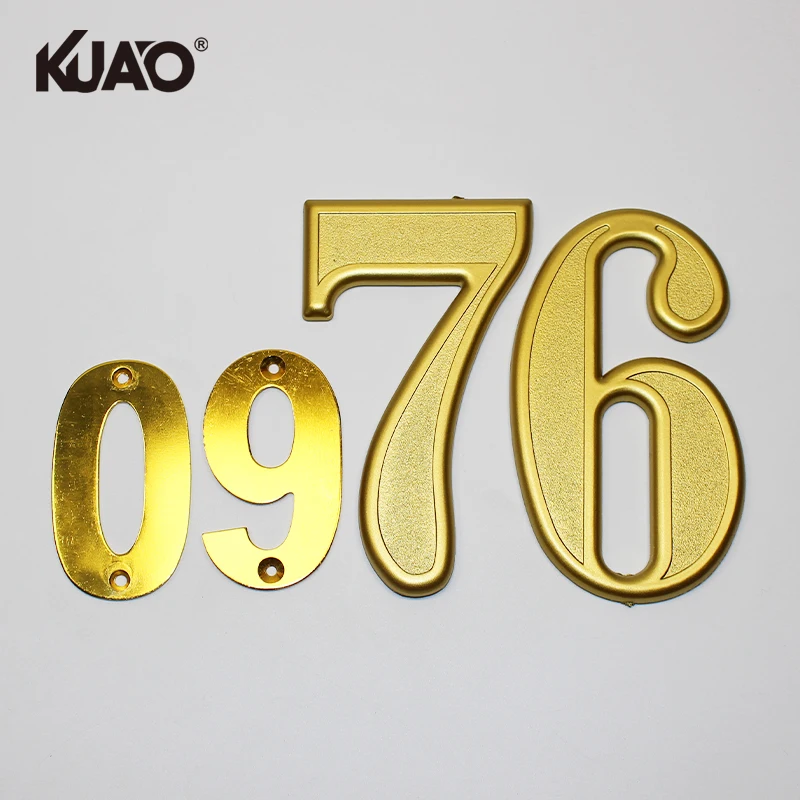
Brass and bronze house numbers offer enduring visual appeal, evolving gracefully through natural oxidation into rich browns or soft verdigris patinas. This organic aging process enhances architectural character and conveys heritage—many homeowners intentionally choose unlacquered brass or bronze for this reason. However, uncoated copper alloys require thoughtful maintenance: in high-humidity, salty, or polluted environments, oxidation may progress unevenly or accelerate surface degradation. While occasional cleaning with pH-neutral brass cleaners preserves uniformity, lacquering halts patination entirely—offering consistency at the cost of authenticity. The decision hinges on balancing aesthetic intent with realistic upkeep expectations for your climate.
Aluminum combines practical advantages with broad design flexibility. At roughly one-third the weight of steel, it simplifies handling and installation while reducing mounting hardware demands. Its natural oxide layer prevents rust, eliminating a major source of long-term maintenance. Manufacturers enhance aluminum’s versatility through two primary finishing methods: anodizing and powder coating—each offering distinct performance profiles for outdoor use.
Selecting the right finish directly impacts how well aluminum house numbers endure sun, rain, and thermal cycling.
| Characteristic | Anodized Finish | Powder-Coated Finish |
|---|---|---|
| UV Resistance | Excellent; integral to the oxide layer | Good; dependent on pigment quality |
| Durability | Highly resistant to chipping and scratching | Can chip if impacted; flexible film |
| Color Retention | Superior; less prone to fading (10+ years) | Moderate; may fade over time (5–7 years) |
| Cost | Generally higher | More cost-effective |
| Best Suited For | High-sun, coastal, or harsh weather locations | Moderate climates with lower UV intensity |
Anodizing electrochemically thickens aluminum’s native oxide layer, creating a durable, UV-stable surface that won’t peel or delaminate. Powder coating applies a thermoset polymer film, offering broader color options and impact resilience—but its longevity depends heavily on resin formulation and UV stabilizers. For homes in high-sun or coastal zones, anodized aluminum is the industry-preferred solution for lasting color fidelity and minimal upkeep.
FSC-certified wood and UV-stabilized acrylic serve distinct niches where sustainability or vibrant aesthetics align with local conditions. FSC wood brings warmth and biodegradability but requires proactive protection: untreated specimens are vulnerable to warping, mold, and insect damage in damp or humid regions. UV-stabilized acrylic excels in moderate climates—retaining color and resisting cracking under seasonal rainfall and mild UV exposure. Both materials underscore a key principle: matching material properties to microclimate significantly improves service life. According to the 2024 Climate-Specific Material Guide published by Architecture Helper, climate-aligned selections extend product lifespans by up to 50% compared to mismatched alternatives.
Consider these performance characteristics:
| Material | Advantages | Ideal Climate Zones |
|---|---|---|
| FSC Wood | Biodegradable, natural aesthetic | Temperate, low-humidity |
| UV-Stabilized Acrylic | Fade resistance, lightweight | Moderate rainfall, mild UV |
Wood performs best in dry-temperate zones—typically those with annual precipitation under 40 inches—while acrylic’s polymer matrix remains stable in environments with average humidity below 70%. For lasting curb appeal, prioritize material specifications that reflect your actual site conditions—not just regional averages.
Stainless steel house numbers offer unmatched durability and corrosion resistance, thanks to their self-healing oxide layer formed by chromium. They are ideal for long-term use in various climates without the risk of rust or moisture damage.
Grade 304 is suitable for most inland and suburban homes, while Grade 316 provides enhanced resistance to chlorides and acidic environments, making it ideal for coastal areas or locations with high-salt exposure.
Brass and bronze develop natural patinas, adding rich coloration and unique character to homes. However, they require maintenance in high-humidity or polluted areas to prevent uneven oxidation.
Aluminum is lightweight and cost-effective, with finishes like anodizing and powder coating offering UV resistance and design flexibility. Anodized finishes are particularly durable for high-sun or coastal climates.
FSC wood is biodegradable and best suited for temperate, low-humidity areas, while UV-stabilized acrylic excels in moderate climates with mild UV exposure and seasonal rainfall.
 Hot News
2025-12-16
2025-12-11
2025-06-05
2024-11-30
Dongyang Kuaou Hardware Co., Ltd.
Copyright © Dongyang Kuaou Hardware Co., Ltd. - Privacy policy
 EN
EN