Selecting the right hook for a lifting operation requires a clear understanding of how different designs handle load movement, alignment, and safety. Each hook type addresses specific mechanical demands—from enabling rotation to preventing accidental release—based on application requirements.
Swivel hooks integrate a rotating joint that allows the hook to turn freely during a lift. This rotation minimizes twisting forces on wire rope or chain, reducing wear and improving control when loads shift or require mid-air realignment. Positioning hooks, by contrast, are fixed and offer no rotational freedom—making them ideal for static lifts where orientation remains constant. For dynamic operations involving variable angles or swinging loads, swivel hooks enhance safety and equipment longevity; positioning hooks suit predictable, vertical lifts where rigidity is preferred.
Eye hooks feature a closed circular eye for direct attachment to a hoist or shackle. Their simplicity and strength make them well-suited for perpendicular, vertically aligned lifts—but they provide no angular adjustment. Clevis hooks use a U-shaped clevis secured with a pin or bolt, allowing pivoting movement at the connection point. This accommodates minor misalignments between load and lifting point, reducing stress concentrations and binding risks. While eye hooks excel in straightforward applications, clevis hooks deliver greater adaptability in complex or variable-angle setups.
Self-closing hooks automatically swing a latch shut under load, covering the throat opening to prevent sling slippage. However, if tension momentarily drops—due to shock, vibration, or load bounce—the latch may open unintentionally. Self-locking hooks incorporate a positive locking mechanism (e.g., spring-loaded or manually engaged) that secures the latch regardless of load fluctuations. This ensures continuous retention even during dynamic conditions. In overhead, personnel, or high-risk industrial lifting, self-locking hooks are strongly recommended—and often mandated—by standards such as ASME B30.10. Their fail-safe design significantly reduces the risk of accidental disengagement, directly supporting human safety and regulatory compliance.
Selecting industrial hooks demands careful evaluation of load ratings, material properties, and compliance with recognized safety standards to ensure reliable, long-term performance.
The working load limit (WLL) represents the maximum safe load a hook can support under normal operating conditions. Exceeding it risks permanent deformation or catastrophic failure. A typical safety factor of 5:1 means a 5-ton WLL hook must withstand at least 25 tons in proof testing—a requirement verified through standardized procedures outlined in ISO 4301 and ANSI/ASME B30.10. Material choice directly affects performance: carbon steel offers cost-effective strength for general use; alloy steel delivers superior toughness for repeated dynamic loading; stainless steel provides essential corrosion resistance in aggressive environments. Certification isn’t optional—it’s evidence of documented material traceability, tensile testing, and defect tolerance validation. Always confirm stamped WLL markings and request official compliance documentation before deployment.
Environmental exposure profoundly impacts hook integrity and service life. In marine, chemical processing, or outdoor applications, corrosion-resistant finishes—including hot-dip galvanizing or epoxy coatings—are critical to prevent rust-induced weakening. For elevated-temperature environments, heat-treated alloy steel maintains structural integrity up to 400°C, while stainless steel grades like 304 and 316 combine moderate heat tolerance with strong corrosion resistance. Fatigue life—the number of load cycles before crack initiation—depends on surface quality, geometric smoothness, and operational stress history. Hooks subjected to frequent thermal cycling, vibration, or corrosive media demand more rigorous inspection protocols and shorter replacement intervals. Matching material and finish to environmental conditions extends service life, reduces unplanned downtime, and strengthens overall system reliability.
In medical devices, hooks serve highly specialized roles—guiding catheters, anchoring sutures, or securing implantable components—where function hinges on micron-level precision rather than brute strength. Tip dimensions may fall below 1 mm, yet performance must remain consistent across thousands of sterilization cycles. Materials are strictly governed by ISO 10993 biocompatibility standards, with titanium alloys and surgical-grade stainless steels selected for inertness, corrosion resistance, and tissue compatibility. Fabrication relies on advanced processes like laser cutting and electrochemical etching to achieve tight tolerances and smooth, burr-free surfaces. Unlike industrial hooks, failure here doesn’t mean dropped cargo—it means compromised diagnostics, procedural delay, or patient harm.
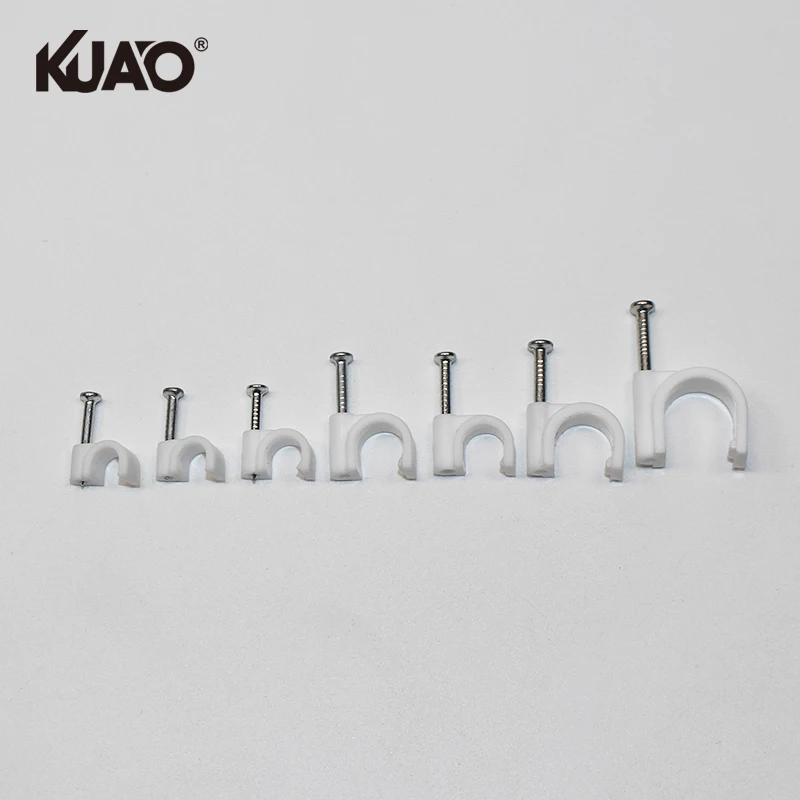
Automotive assemblies and data center cable management rely on compact, highly engineered hooks designed for integration—not isolation. These include clip-style fasteners routing wiring harnesses within vehicle chassis and spring-loaded hooks organizing cables in server racks. They must fit within tight dimensional envelopes, avoid sharp edges that could damage insulation, and maintain consistent retention force over thousands of insertion/removal cycles. Performance is validated under automotive-grade vibration and thermal cycling tests. Materials like reinforced nylon or tempered spring steel are chosen for flexibility, oil resistance, and long-term dimensional stability. Though lightweight, their repeatability and durability are mission-critical—ensuring electrical continuity, signal integrity, and mechanical reliability across the product lifecycle.
Swivel hooks allow rotational movement to minimize twisting forces, ideal for dynamic loads. Positioning hooks are fixed and suited for static, vertically aligned lifts.
Clevis hooks are better for situations requiring pivoting or minor misalignment adjustments, while eye hooks are optimal for straightforward, perpendicular lifts.
Self-locking hooks secure the latch even under dynamic conditions, reducing risks of accidental disengagement compared to self-closing hooks.
The WLL represents the maximum safe load under normal conditions. It's tested with safety factors, as defined by standards like ISO 4301 or ANSI/ASME B30.10.
Material choice depends on application requirements like strength, corrosion resistance, and temperature tolerance. Carbon, alloy, and stainless steels are common options.
 Hot News
2025-12-16
2025-12-11
2025-06-05
2024-11-30
Dongyang Kuaou Hardware Co., Ltd.
Copyright © Dongyang Kuaou Hardware Co., Ltd. - Privacy policy
 EN
EN